

Creating Books That Transcend Borders And Culture, Teaching Timeless Lessons To Our Kids
Children’s Books
written by Dr. Ogbiji Victor Okom, Ed. D.
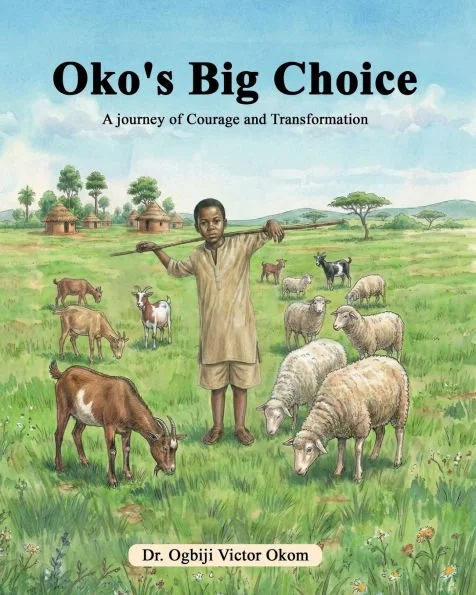
Five-year-old Oko is caught between two worlds: the fertile soil of his father's farm and the boundless potential of the classroom. To his father, Ida, school is a profound threat to their cherished traditions and a loss of vital labor on the land they depend upon. However, young Oko sees education not as a rejection of his roots, but as the key to truly understanding the very earth his family toils over. Through a hard-won compromise brokered by his uncle, Oko embarks on an extraordinary journey that takes him from his small, traditional village all the way to the halls of a prestigious university.
Oko's Big Choice: A Journey of Courage and Transformation is a moving tale of perseverance and reconciliation, proving that education doesn't replace heritage, it honors it by sowing the seeds of a brighter future. Beyond the narrative, the book features a special section packed with Comprehension Questions, Multiple Choice Questions, Short Answer Questions, and Discussion Questions designed to deepen understanding. By combining this powerful story with interactive exercises, the book helps parents and teachers guide children through the profound themes of tradition, transformation, and the courage to forge their own path.
Oko’s Big Choice - A Journey of Courage and Transformation
For ages 3-18
Available In All Formats
Buy It Today!
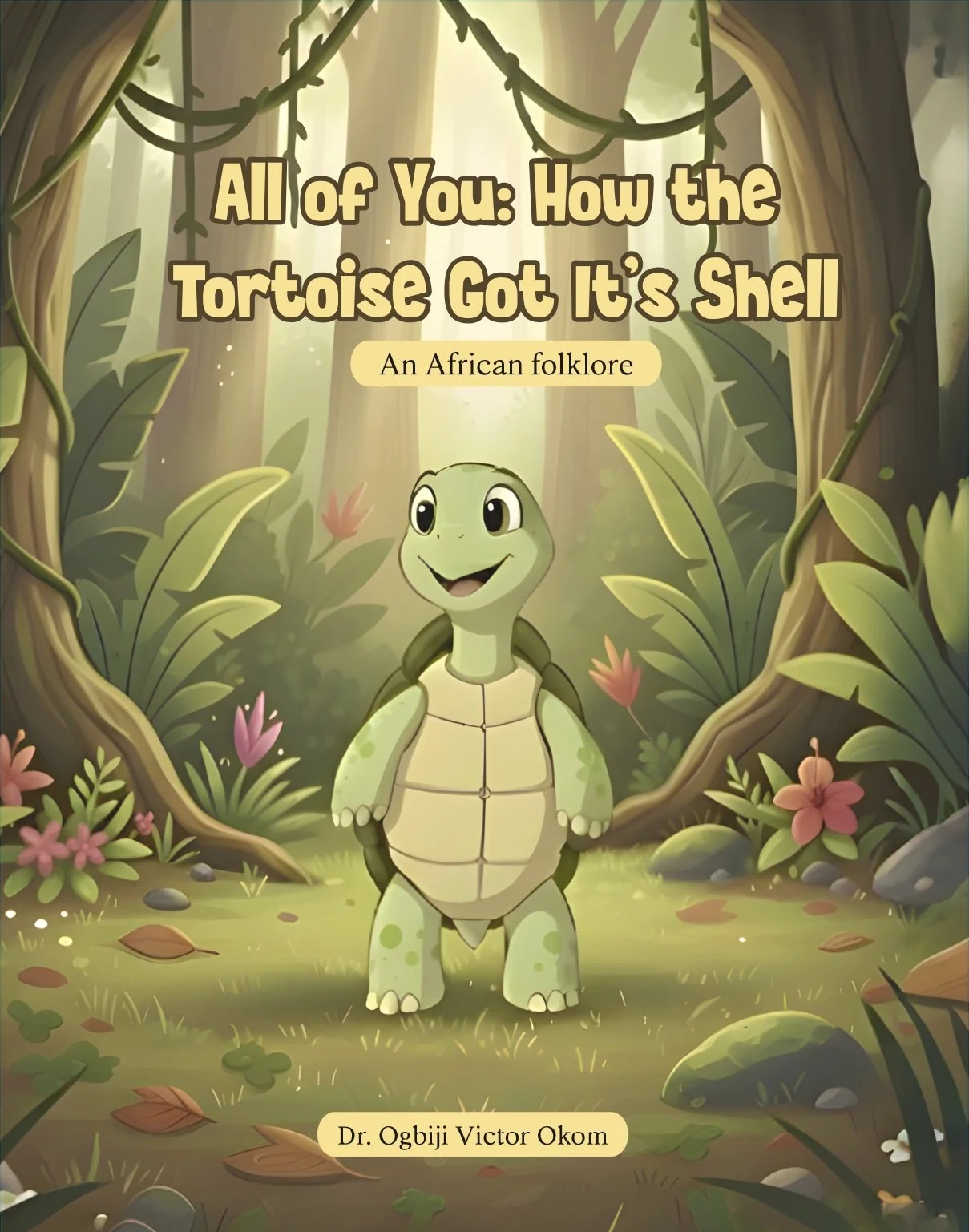
Long ago, Tortoise was known to be one of the most respected animals in the kingdom. He walked with dignity and had no shell on his back, but a single act of greed changed his destiny forever. This captivating piece of African folklore follows the wily Tortoise as he plots to join the birds’ grand feast in the sky. When he cunningly tricks his way into the festival, his actions spark surprising events that change him forever. He soon discovers that his selfish scheme comes with a heavy price. Readers will have to turn the pages to discover exactly how his deception led to the permanent mark he carries today.
This book serves as both an entertaining narrative and a complete activity book for young minds. Beyond the tale itself, it features a special section packed with Comprehension Questions, Multiple Choice Questions, Short Answer Questions, and Discussion Prompts designed to deepen understanding. By combining this classic folklore with interactive exercises, the book helps parents and teachers guide children through essential life lessons.
Young readers will learn that greed and dishonesty lead to downfall, while understanding why community values matter. Ultimately, the story demonstrates that actions have lasting consequences and that true respect must be earned through integrity.
All Of You: How The Tortoise Got It’s Shell
For ages 3-18
Available In All Formats
Buy It Today!
Big Ideas, Real Impact.
My journey as a storyteller began in my village of Nyanya, within the Bekwarra clan of Eastern Nigeria.
In my childhood, storytelling was more than a pastime—it was a form of entertainment as well as a channel for conveying the tribal beliefs, moral values,and mythology of the tribe to children. Storytelling was the heartbeat of the village or community.
Traditional oral folklores are told by the elders to children, and the children in turn tell it to each other as a form of entertainment and as a reminder of life lessons about the tribe. During the day, children were expected to help their parents on the farms, but as evening fell, the village was transformed into pockets of gazebos of gathering places for children’s nightly storytelling. Accompanied with games and songs, storytelling became a way to preserve tribal culture and the gazebos, our most profound classroom for learning village ethos.
When I entered elementary school in Nigeria, this oral tradition was formally integrated into our daily instruction, usually occurring right after lunch. Many years ago, I returned to my village and was moved to find this tradition still thriving. I recorded several of these stories to bring back to my own children and, most importantly, to share with my students.
As an educator here in the United States, I noticed that this type of ritualistic storytelling was missing. I therefore, developed and incorporated storytelling as an art form and a framework along with tribal games, drumming or music, and artifacts into my instruction using a platform and a framework called African Village Safari™. The name “African Village Safari” suggests a journey of discovery and a focus on community – based learning. By using this culturally responsive strategy in my classroom to address the cultural and asset discrepancy or discontinuity between minority students’ home experience and school experience as a result of attending traditional school programs, students realize three related benefits: academic success, cultural competency, and social justice.
The African Village Safari™ framework can be adopted as a year-long powerful instructional approach to address equity and social justice in instructional design and curriculum planning. This Culturally Responsive Teaching approach effectively increases students’ engagement in the instructional design, knowledge production or creation, and ultimately results in their success. If classrooms, schools, community centers, or libraries are in need of an African Village Safari™ presentation, contact me.